











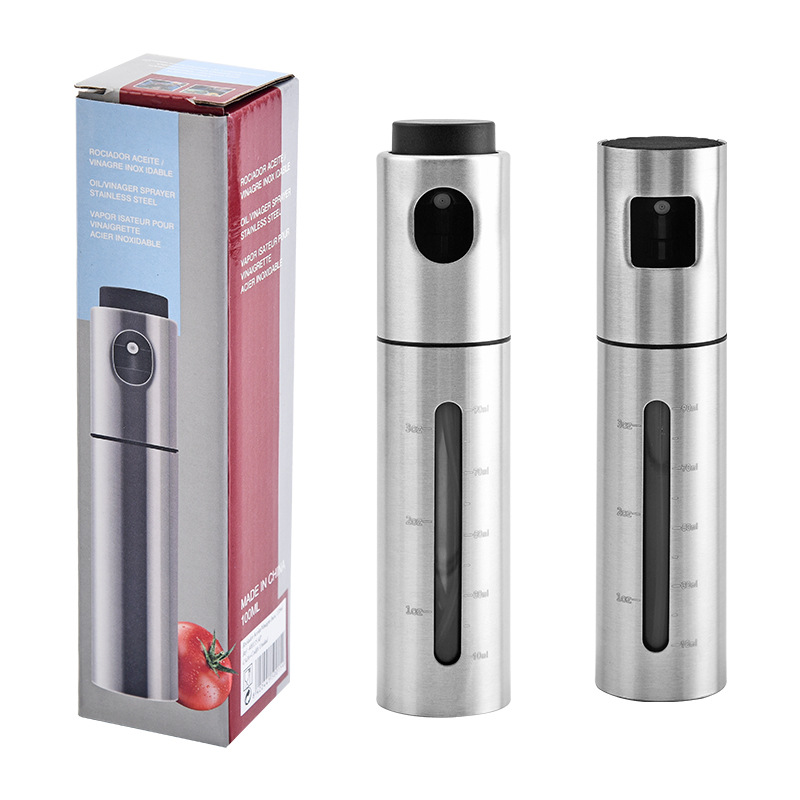
Advantages
Precise Oil Control:
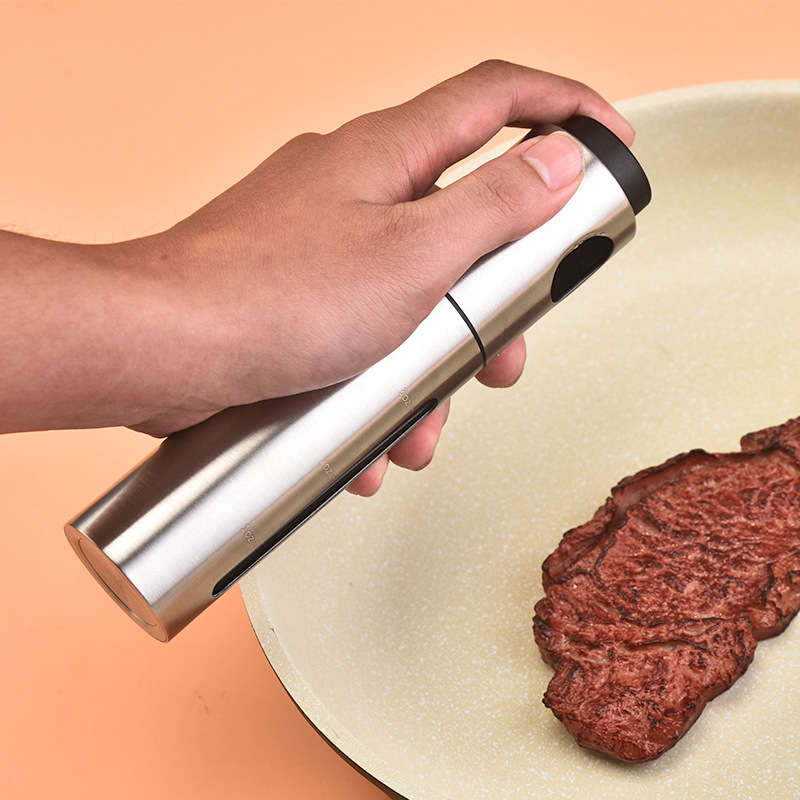
Adopting a press-type design, the oil output can be precisely controlled by adjusting the number of presses and pressure applied. This avoids the common issue of excessive or insufficient oil in traditional pouring methods, helps reduce oil intake, aligns with the concept of healthy eating, and is particularly suitable for people pursuing low-fat diets or needing strict control over oil intake.
Uniform Atomization:
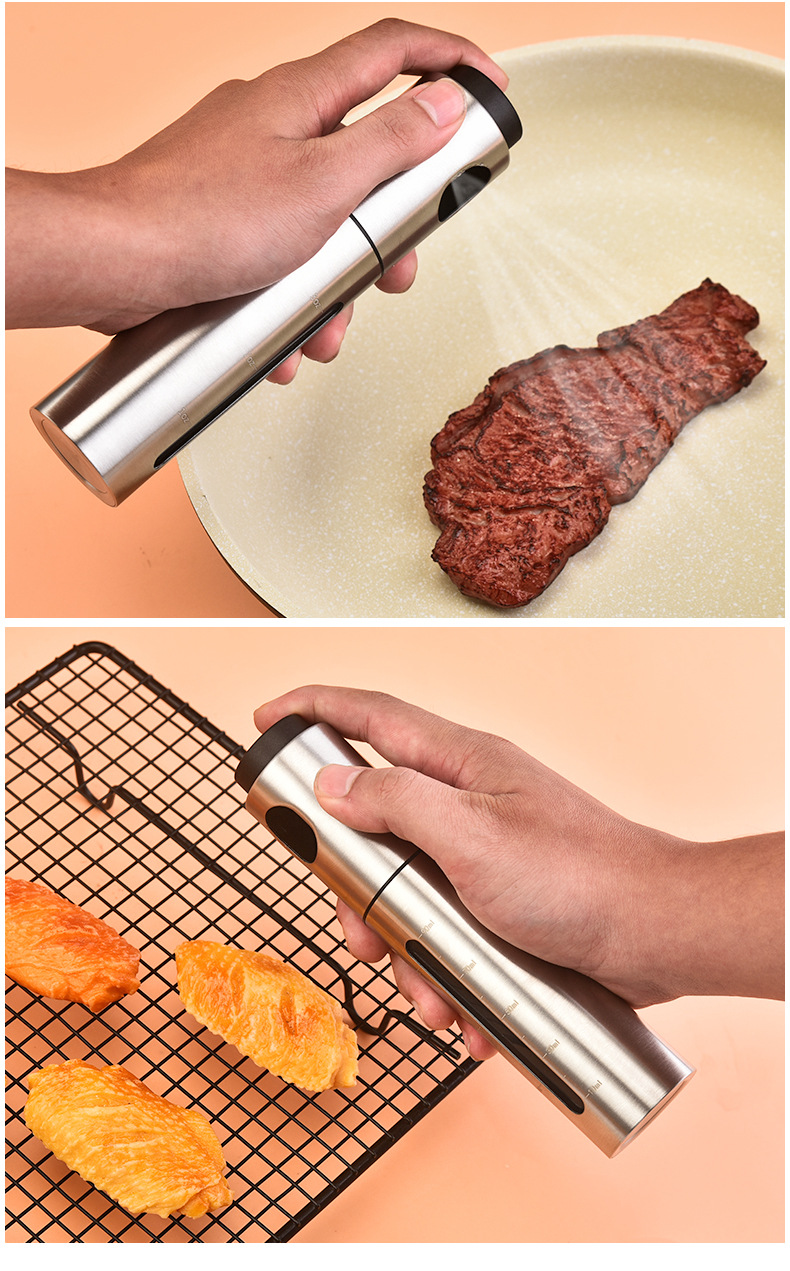
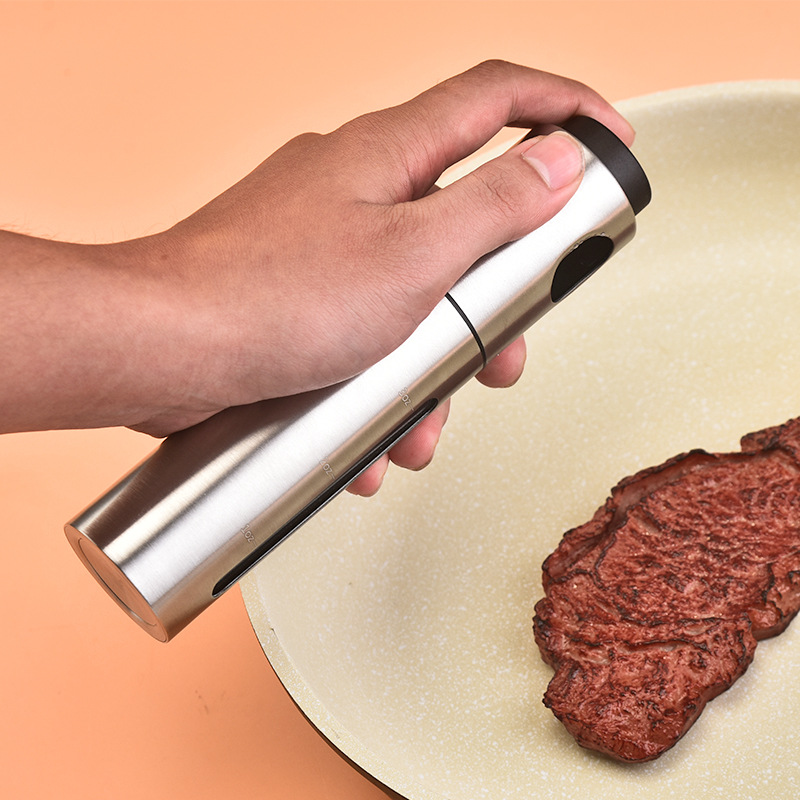
The specially designed spray head can atomize and spray oil evenly, forming a thin and uniform oil film on the surface of ingredients or the bottom of the pot. This ensures more even heating of food and improves cooking results. For example, in baking, a uniform oil film makes it easier to release cakes, cookies, and other baked goods from molds, while enhancing their attractive color.
High-Quality Material:
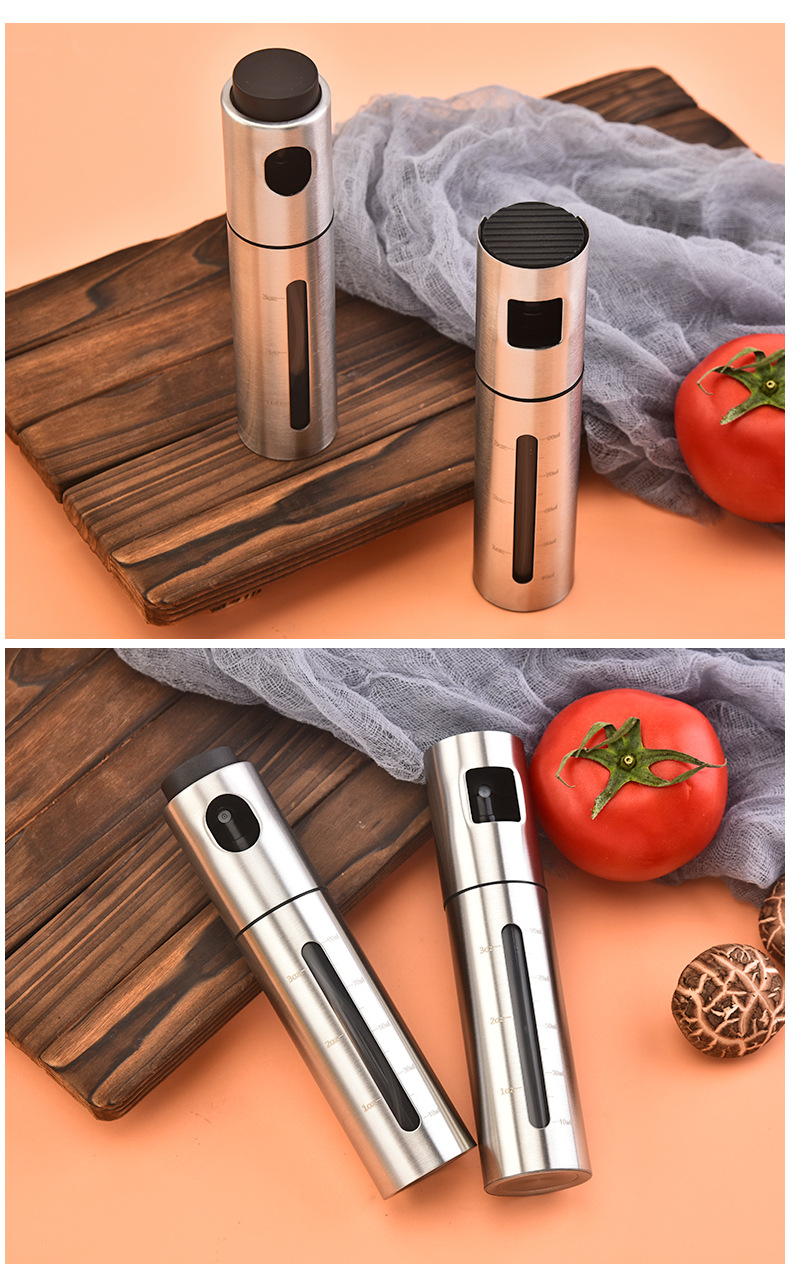
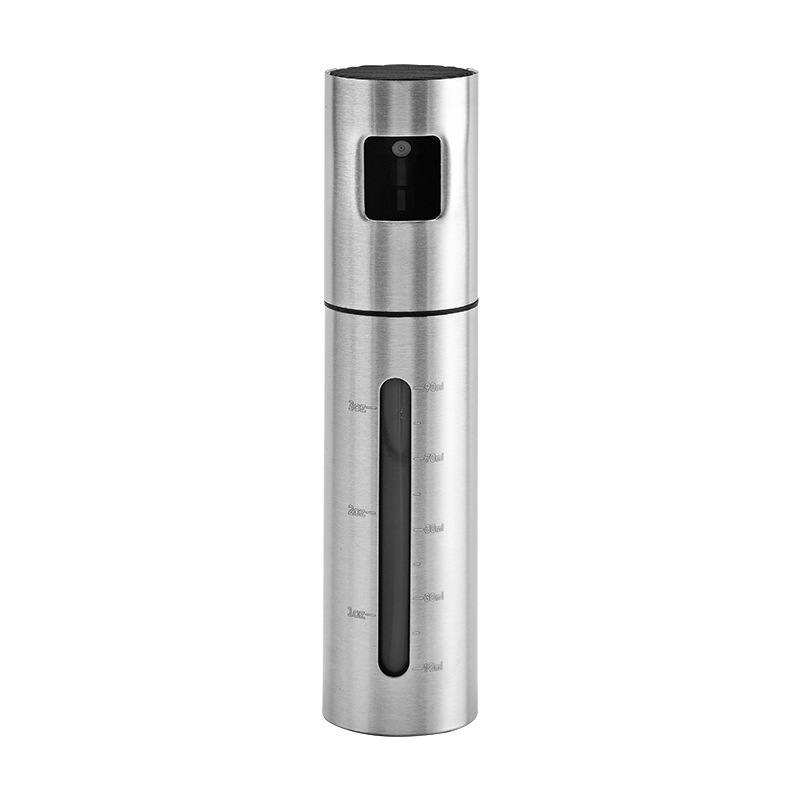
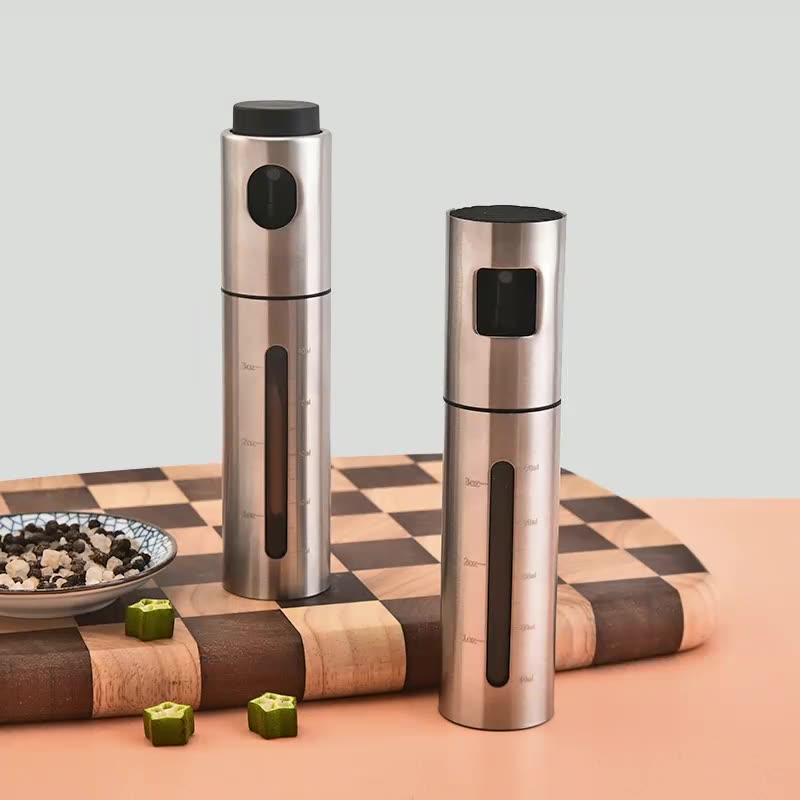
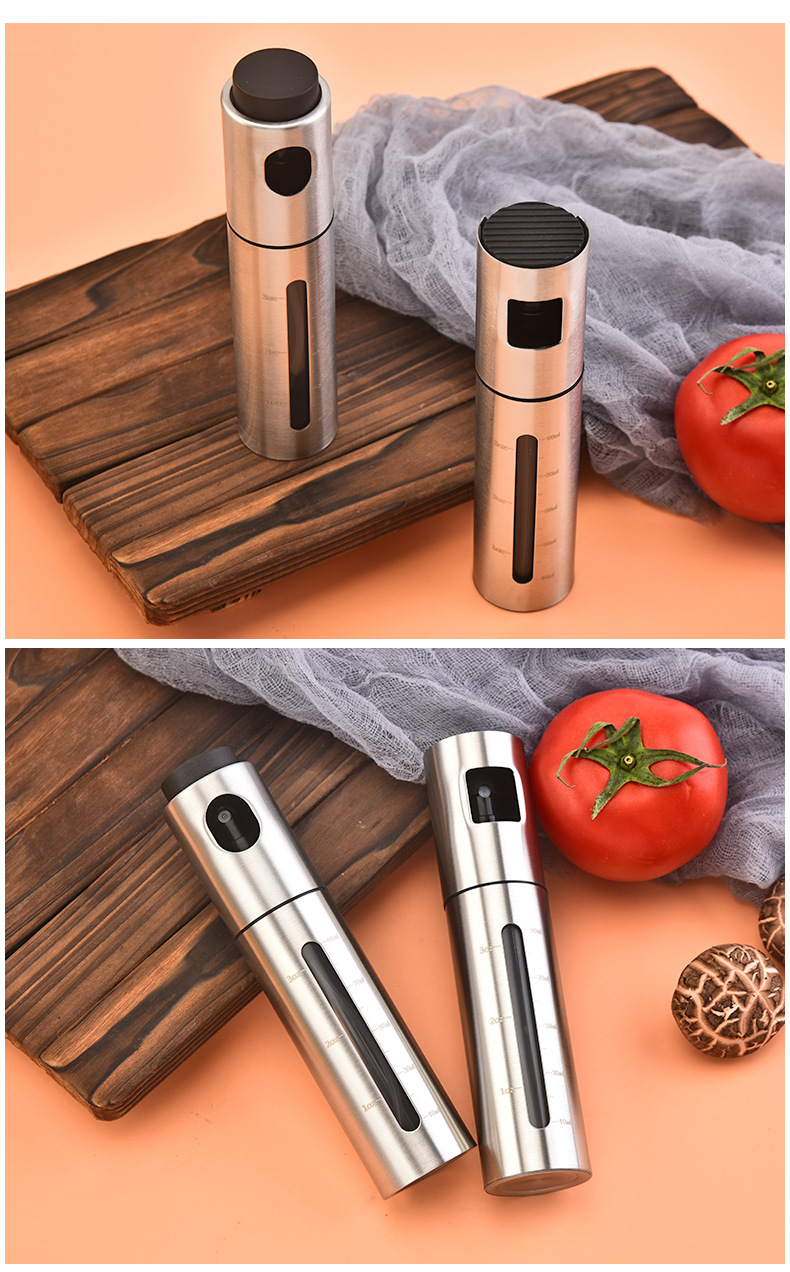
The main body is made of stainless steel, usually food-grade materials such as 304 stainless steel. It features excellent corrosion resistance, stability, and durability, and is not prone to chemical reactions with edible oil. This ensures the quality and safety of edible oil, while being less likely to be damaged, resulting in a longer service life.
Versatile Application Scenarios:
It is not only suitable for regular kitchen cooking scenarios such as stir-frying, frying eggs, and deep-frying, but also ideal for barbecue, baking, air fryers, and other cooking methods. During barbecues, it can evenly spray oil on meat, vegetables, and other ingredients to prevent sticking to the grill and enhance flavor. When used in air fryers, it can replace oil brushing, saving oil while improving the texture of food.
Easy to Clean:
The smooth surface of stainless steel is less likely to retain oil stains. After use, simply rinse with water or wipe with detergent to easily remove dirt. The spray head of some oil sprayers is detachable, facilitating in-depth cleaning of the interior and preventing oil buildup.
Usage Notes
Correct Oil Filling:
Pour edible oil into the bottle before use, taking care not to fill it too full to prevent oil from overflowing during pressing. Also, ensure the bottle cap is tightly closed to avoid oil leakage.
Control Pressure and Distance:
When pressing the oil sprayer, apply moderate pressure to avoid excessive oil mist due to too much force. Maintain an appropriate distance between the spray head and ingredients or the pot bottom, usually around 15-20 centimeters, to ensure the oil mist sprays evenly.
Regular Cleaning:
Clean the oil sprayer promptly after use to prevent residual edible oil from breeding bacteria inside the bottle. When cleaning, disassemble the sprayer, rinse the spray head and bottle body with water, then dry with a clean towel or let air dry.
Avoid High Temperature and Impact:
Although stainless steel has certain heat resistance, avoid placing the oil sprayer in high-temperature environments for a long time, such as near stoves or directly in ovens, as this may affect its performance and service life. Additionally, prevent severe collisions to avoid deformation of the bottle body or damage to the spray head.
Selection Methods
Check Material:
Prioritize oil sprayers made of food-grade 304 stainless steel to ensure safety, non-toxicity, and corrosion resistance. 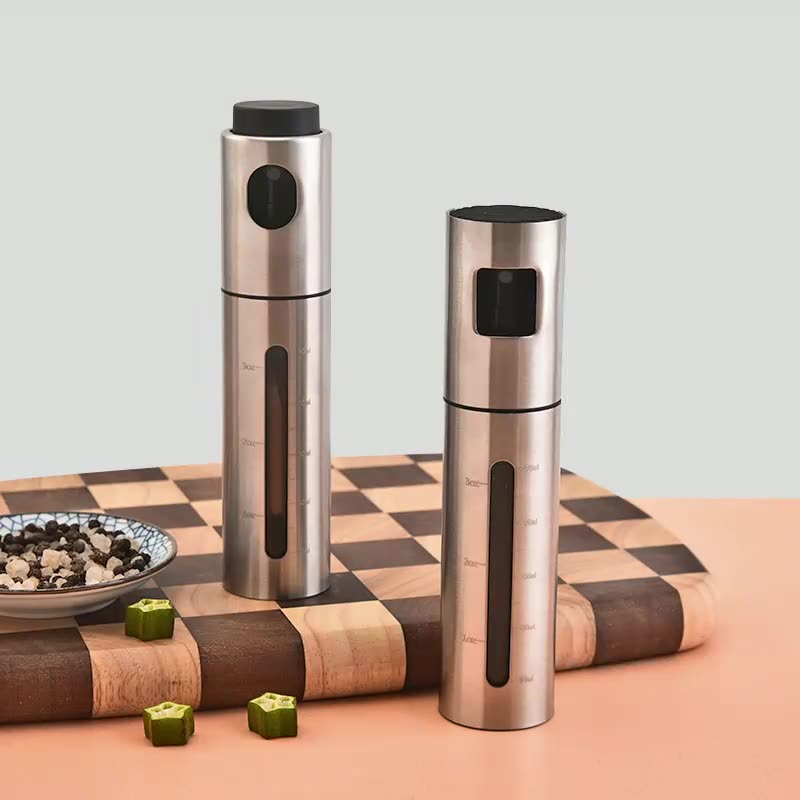
inspect whether the bottle body and spray head are made of sturdy materials, with no defects or cracks.
Test Atomization Effect:
When purchasing, test the atomization effect on-site. Press the spray head and observe whether the oil mist is uniform, fine, and whether the spraying range is appropriate. High-quality oil sprayers should atomize oil into fine particles evenly, with a large and uniform coverage area.
Consider Capacity:
Choose an appropriate capacity based on family size and usage frequency. Generally, a capacity of 200-500 milliliters is common and suitable for most families. For larger families or frequent heavy cooking, a larger capacity sprayer can be selected.
Pay Attention to Design Details:
Opt for an ergonomically designed oil sprayer with a comfortable grip, appropriately sized press handle, and reasonable pressing stroke for easier use. Additionally, check for anti-drip design to avoid oil stains remaining on the bottle body after pouring.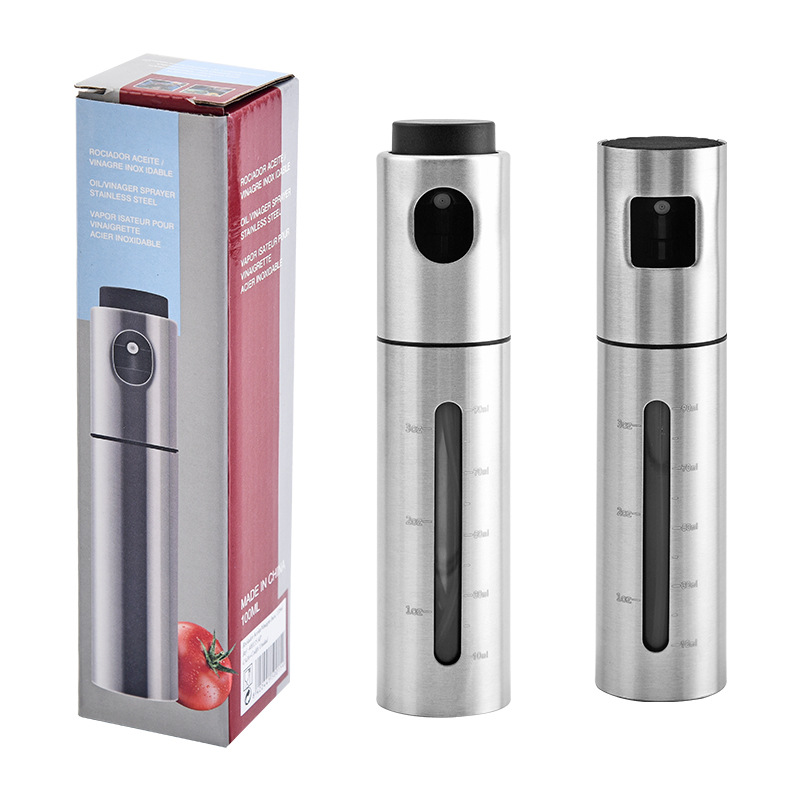
Market Information

Chinese Market
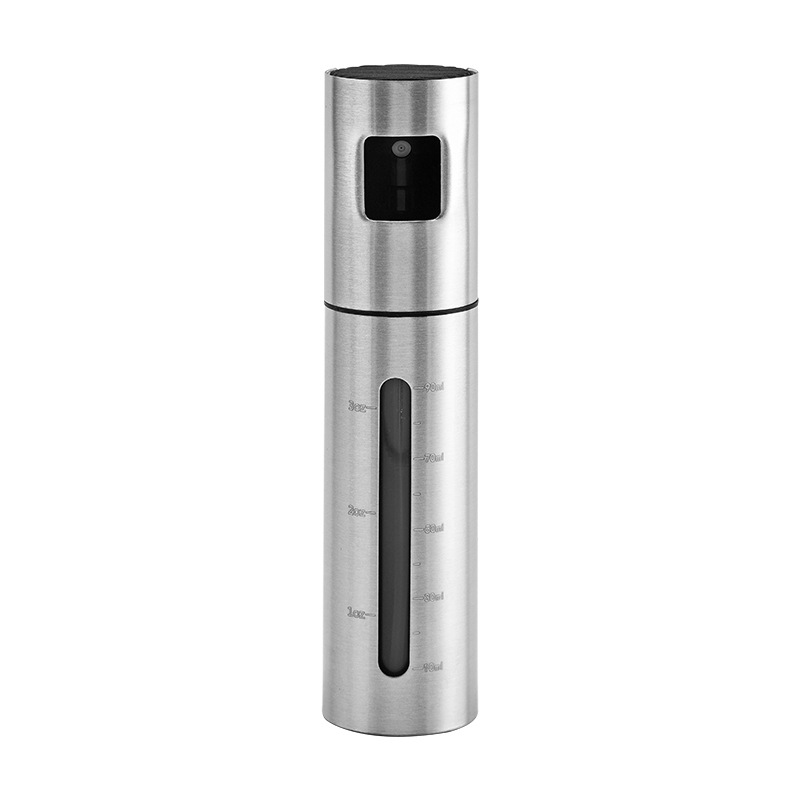
Stainless Steel Oil Sprayer Bottle - Household Press-Type Atomizing Oil Sprayer, Olive Oil Bottle, Kitchen Barbecue Oil Sprayer Pot